
Table of Contents
A person can know the amount printed on a gift card and still lack the information needed for a reliable exchange decision. With a safer gift card exchange decision, the issuer, current balance, product type, regional terms, delivery format, purchase record, and present service conditions all matter. The safest first step is to establish those facts without exposing the credentials that control the funds.
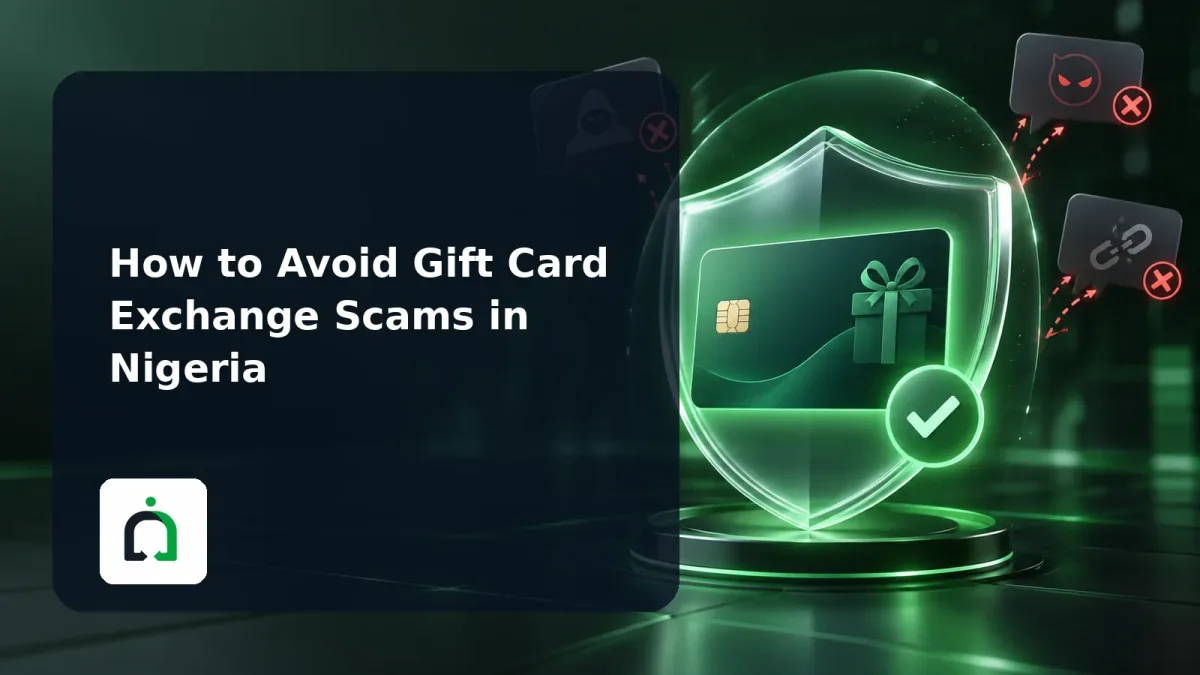
Gift card credentials can function like cash because anyone with the usable number and PIN may be able to redeem the value. The FTC warns that scammers commonly create urgency and request gift card numbers as payment. A safer exchange begins by verifying the site and contact route before discussing sensitive credentials or following payment instructions.
Verify the service independently
Open the official website yourself and use the contact options published there. Check spelling, domain, secure connection, and whether a WhatsApp or social account is linked from the official site. Do not rely on a forwarded profile, search advertisement, or message that merely copies a company’s name and logo.
Sensitive credentials should stay outside an initial enquiry. A full card number, PIN, claim code, security code, account password, or one-time authentication code can expose value or account access. Start with non-sensitive classification details and move to a verified review channel only after the process is clear. The FTC warns that scammers often create urgency and ask for gift card numbers and PINs, which is why deliberate handling is essential.
Recognize pressure and credential theft
Stop when someone demands immediate action, asks you to buy additional cards, requests a card as payment for taxes or fees, or wants unrelated account passwords, one-time codes, or remote access. The FTC identifies urgency and requests for the card number and PIN as core gift card scam patterns.
Original evidence is more useful than a polished screenshot. Keep the physical card, carrier, receipt, order confirmation, delivery email, and any issuer support response in their original state when available. These records can clarify the product and help resolve a mismatch. They do not guarantee acceptance or a particular rate, but they give the reviewer a coherent record and give the seller something reliable to consult if a dispute or fraud concern appears.
Control what you disclose and when
Use non-sensitive card details for a preliminary quote. Ask why each later document is required, how the card is protected during review, when acceptance occurs, and what happens if the quote changes. Keep the physical card, receipt, original email, and complete conversation until the matter is closed.
A sound decision about a safer gift card exchange decision separates observable card facts from a service’s commercial judgment. The issuer controls the balance, redemption rules, and official support route. The original card or delivery record identifies the market, currency, format, and denomination. The exchange service decides whether that exact profile is currently reviewed and what conditional quote it can offer. A familiar brand name high quote or fast message does not verify the person website payment destination or handling process. Combining those roles into one assumption is a common source of rejected submissions and misleading comparisons.
At the quotation stage, the phrase how to avoid gift card exchange scams in Nigeria can support a careful comparison if the seller records what the quote covers and remains free to stop before the service’s stated acceptance point.
Respond quickly if value may be stolen
If you shared a code with a suspected scammer, contact the gift card company immediately and ask whether the funds can be frozen or recovered. Preserve the card and receipt. Report the incident through the appropriate official channels rather than negotiating with the suspected scammer or paying another fee for recovery.
Timing matters, but speed should not erase the audit trail. Record when the balance was checked, when the quote was issued, and whether the service gave an expiry or review condition. If a rate changes, compare the old and new card descriptions before assuming the platform simply reduced the offer. A change in balance, region, format, evidence status, or demand can produce a different calculation even when the retailer name remains the same.
Build a verification habit
|
Warning sign |
Why it matters |
Safer response |
|---|---|---|
|
Urgent deadline |
Prevents independent checking |
Pause and verify |
|
Unpublished contact |
May be an impersonator |
Open the official site |
|
Full code requested early |
Can expose stored value |
Start with non-sensitive details |
|
Extra fee by gift card |
Matches common scam pattern |
Do not pay |
|
Recovery payment |
May be a second scam |
Contact issuer and authorities |
The most common scam patterns
Retailer support and exchange support answer different questions. The retailer or issuer can address balance errors, activation, delivery, product terms, and redemption. The exchange service controls current eligibility, evidence requirements, and its own quote. A familiar brand name high quote or fast message does not verify the person website payment destination or handling process. Sending each issue to the party that controls it saves time and reduces the risk that an informal statement will be treated as a guarantee.
A rate enquiry should preserve a genuine choice. Before releasing sensitive credentials, the seller should know whether the quote is indicative or final, when acceptance occurs, whether cancellation is possible, and what happens if verification changes the amount. If the explanation is incomplete, pause. If the conditions are clear but unattractive, decline through the official channel and retain the written closure.
For a safer gift card exchange decision, a comparison sheet should use one row per quote and fixed fields for brand or issuer, country, currency, denomination, available balance, physical or digital format, receipt status, quote time, review status, and possible revision trigger. Do not store the redeemable number in that sheet. Consistent fields reveal when two headline rates apply to different products rather than competing offers for the same card.
A calculator checks arithmetic; it does not establish the correct rate. The service must first match the rate to the verified card profile. Record the rate unit, the balance or denomination to which it applies, the timestamp, and whether the result is preliminary. If any input changes, calculate again using the updated quote instead of forcing the earlier number onto a different card.
Security mistakes to avoid
A third error is treating an old public rate as a binding offer. A published number may refer to another market, format, value band, evidence status, or moment of demand. Ask for a timestamped quote tied to the exact card profile. If the service cannot explain what the number covers, the apparent precision is not useful for a decision.
Sellers also create unnecessary rejection risk by editing images, cropping away identifiers, submitting the same card to several reviewers, or spending part of the balance during verification. Preserve original evidence and keep the card unchanged until the request is closed. If a correction is needed, explain it in the same verified conversation rather than silently uploading a replacement image.
Finally, do not assume that a valid card must be accepted by every exchange. A familiar brand name high quote or fast message does not verify the person website payment destination or handling process. A card can have genuine stored value and still fall outside a service’s current eligibility, documentation, region, or risk criteria. Ask for the reason category, correct any factual mistake, and use issuer support for issuer-controlled problems rather than attempting to bypass a restriction.
The first avoidable error in a safer gift card exchange decision is relying on the brand name alone. A brand can issue cards for different countries, currencies, formats, and value bands. Some programmes also impose country-specific redemption rules. Copy the exact product wording and currency from the original card or order, then confirm the market instead of inferring it from artwork or the seller’s location.
Pre exchange safety checklist
- Navigate to the official site independently.
- Verify messaging accounts from the site.
- Keep the number and PIN private during the first enquiry.
- Reject urgent demands for more cards or unrelated credentials.
- Save the card, receipt, messages, and transaction timeline.
Questions about gift card fraud
Is a high rate proof that a platform is legitimate
No. A quote does not verify identity, security, payment, or card-handling practices.
Should a government agency ask for gift card payment
The FTC says real government agencies do not demand payment by gift card.
What should I do after sharing a code with a scammer
Contact the card issuer immediately, preserve the card and receipt, ask about available action, and report the fraud through official channels.
Can a copied logo verify a WhatsApp account
No. Confirm the account from the company’s official website or another independently verified channel.
Verify before disclosing value
Before sharing any redeemable information, open the service’s official website independently and verify the exact contact route. Keep a short record of the quote, evidence request, acceptance point, and expected payment process. If pressure or impersonation appears, stop and contact the card issuer.
Before relying on any result, compare it with the verified facts for a safer gift card exchange decision. Keep the issuer record, the current quote, and the final decision together. If the balance, product classification, evidence status, or timing changes, request updated information instead of forcing the earlier estimate to fit a different card profile.